recipe
Puff Puff: Nigerian Yeasted Dough Fritters
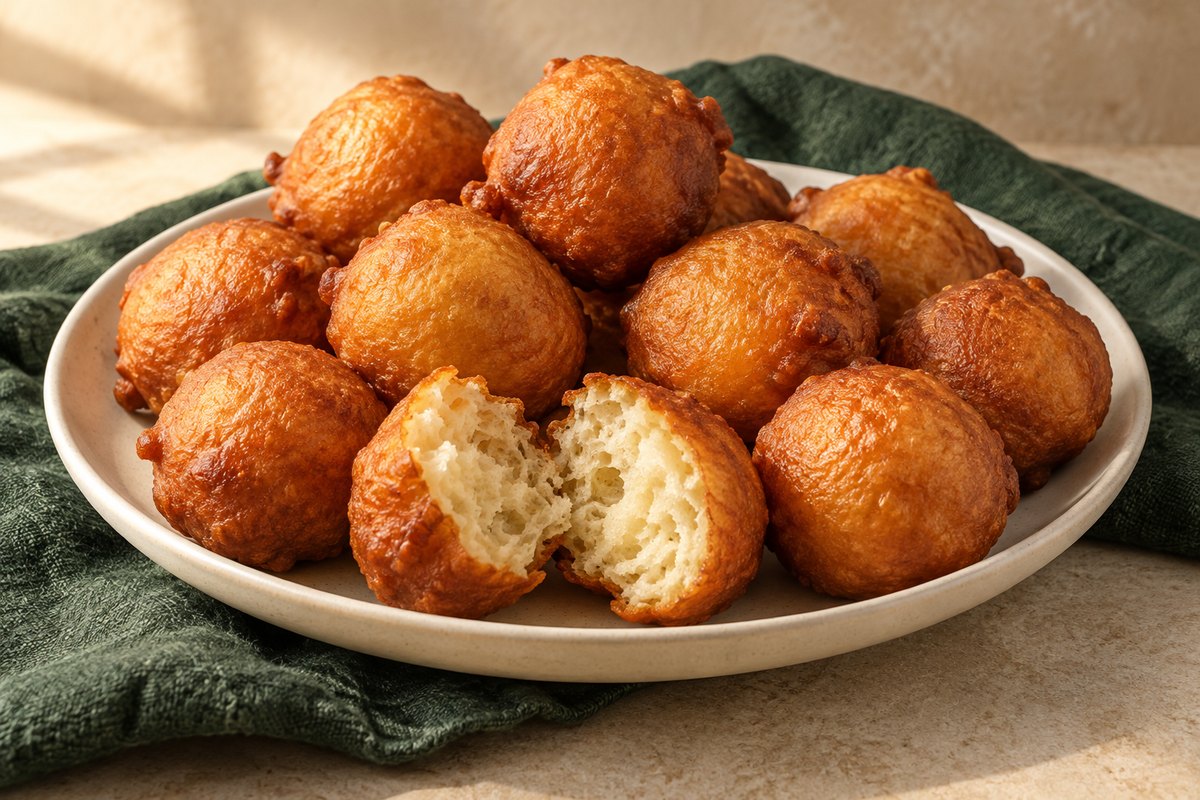
Sweet, lightly nutmeg-scented puff puff made with instant yeast, a measured flour weight and a spoon-scooped frying method.
Plus 1–2 hours for the batter to rise.
About 5 snack portions; the number of puff-puffs depends on scoop size
Plan ahead: Let the batter become bubbly and roughly double, usually 1–2 hours, before frying.
Ingredients and method
About 5 snack portions; the number of puff-puffs depends on scoop size
Planning estimate: 40–60 min · Moderate. Plus 1–2 hours for the batter to rise.
Plan ahead: Let the batter become bubbly and roughly double, usually 1–2 hours, before frying.
Timing guide: Allow about 10 minutes to mix and the remaining time to heat the oil and fry small rounds, roughly 4–6 minutes each. The rise is additional and may take longer in a cool room. Check the first piece inside before frying the rest.
Method
- Use a large mixing bowl with room for the batter to double, a sturdy spoon, a deep heavy pot, a frying thermometer and a small scoop or two dry spoons. Weigh the flour when possible. Stir the flour, sugar, instant yeast, salt and optional nutmeg together.
- Add the 275 ml water gradually, stirring until no dry flour remains and the batter is cohesive and stretchy. It should be too soft to knead but thick enough to fall slowly off a spoon. If needed, add extra water a tablespoon at a time, stopping before it becomes thin or freely runny. Use lukewarm water that feels barely warm, not hot.
- Cover and leave in a warm, draft-free place until the batter is bubbly and about doubled in volume, often 1–2 hours. Watch the rise rather than relying on that estimate. Do not taste raw batter. If it does not rise, check yeast freshness and room warmth before frying.
- Add oil 2 inches deep to a pot that remains no more than half full, leaving generous room for bubbling. Heat to about 350°F. Lightly stir the risen batter once to make it manageable without beating all the air out.
- Scoop a rounded tablespoon and use a second dry spoon to slide it into the oil close to the surface. Fry one piece first, turning to brown the whole surface, about 4–6 minutes as a starting estimate. Lift it out, let it cool briefly, and break it open: the center should be fully set and springy, with no sticky raw dough.
- Adjust before continuing: make smaller scoops or lower the heat if the outside browns too quickly. Fry small batches, maintaining roughly 340–350°F and leaving room for the pieces to turn. Lift out once golden brown and cooked through, and drain on a rack or paper-lined plate.
- Serve warm after the centers have cooled enough to eat. Turn off the burner and allow the frying oil to cool completely before handling it.
A yeast batter, with weight as the anchor
Puff puff is a yeasted fried dough snack eaten in Nigeria and elsewhere in West Africa. This batch uses instant yeast mixed directly into flour. Its weight-based formulation follows half of Ajoke’s recipe, starting at the lower end of the water range so different flour brands can be adjusted by texture.
Cups are only an approximation for flour: scooping and packing can change the amount substantially. The intended batter is thick and scoopable. Self-rising flour, baking powder and gluten-free flour blends are not direct swaps for this wheat-and-yeast method.
Roundness matters less than a cooked center
A spoon or small scoop makes it possible to portion the sticky batter without squeezing it through your fingers over hot oil. Irregular shapes are fine; keep the portions similarly small so the center cooks before the outside becomes too dark.
This recipe contains wheat. It has no added egg or milk, but raw flour still requires cooking. Do not taste the batter, and wash hands, utensils and work surfaces after handling it. Nutmeg may be omitted without changing the batter structure.
Fry with room in the pot
Use a deep, stable pot and keep the oil well below the rim so bubbling food cannot overflow it. Stay at the stove, keep water and wet utensils away from hot oil, and let the oil cool fully before handling. If oil smokes, turn off the heat. Never put water on an oil fire.
Lift out loose crumbs between batches. Discard oil that develops an unusual smell, persistent foam or smoke; repeated heating changes its quality.
Keep leftovers safely
These are best fresh. Refrigeration and reheating will change their soft crust. Refrigerate leftovers in shallow containers within 2 hours of cooking, or 1 hour when the surroundings are above 90°F. Keep the refrigerator at 40°F or colder, use within 3–4 days and reheat to 165°F.