recipe
Asaro: Nigerian Yam Porridge
White African yam simmered with red pepper, tomato and palm oil, then partly mashed into a thick porridge with tender chunks and optional fish.
Includes peeling and cutting the yam.
One batch from 2 pounds peeled yam; about 4 servings, depending on accompaniments
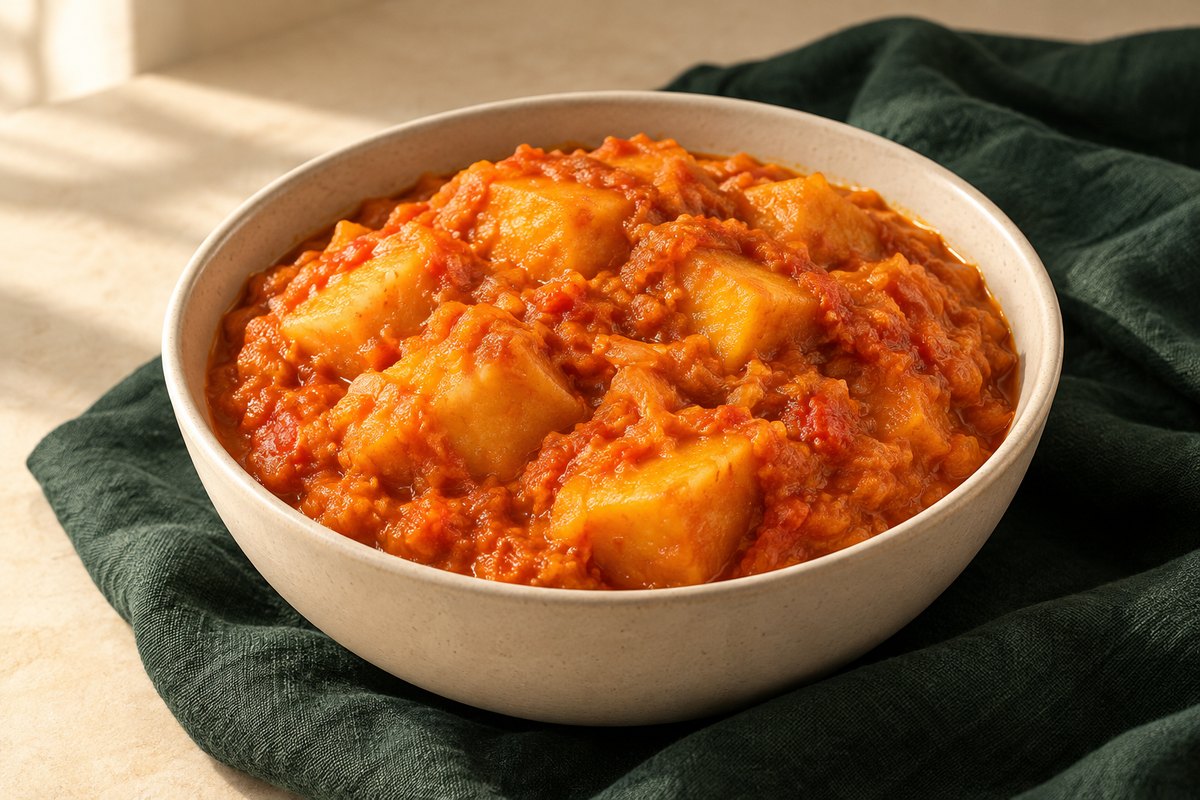
Ingredients and method
One batch from 2 pounds peeled yam; about 4 servings, depending on accompaniments
Planning estimate: 45–60 min · Easy. Includes peeling and cutting the yam.
Timing guide: Allow 15–20 minutes to prepare the yam and pepper mixture, then about 25–35 minutes of simmering and finishing. Older or larger yam pieces need longer; every piece must be fork-tender.
Method
- Choose food-grade white African yam labeled puna, white yam or Nigerian yam. Wash the outside before peeling. Cut a stable section on a board, remove the thick brown skin with a knife, and cut the pale flesh into chunks. Rinse well. This recipe is for true yam, not orange sweet potato or cassava.
- Blend the bell pepper, tomato, chopped half-onion and optional hot pepper to a coarse puree, using a few tablespoons from the measured water only if needed. Use a heavy 4-quart pot with a lid, a sturdy spoon and optionally a potato masher.
- Put the yam, pepper puree, remaining measured water, salt and optional bouillon in the pot. The combined liquid should come close to the top of the yam without drowning it. Add a little more water if needed. Bring to a gentle boil, then reduce the heat, cover and simmer for about 10 minutes.
- Stir in the red palm oil, sliced onion and optional crayfish. Keep the oil red; it is simmered in the porridge, not heated separately to smoke. Cover and cook gently, checking and stirring near the bottom, until a fork passes easily through the largest yam pieces. Begin checking after another 10 minutes and keep cooking if firm.
- If the pot becomes dry before the yam softens, add hot water a little at a time. Once tender, press roughly a third to half of the yam against the side of the pot with the spoon or use a masher lightly. Leave other chunks intact. Stir to blend the mashed yam into the liquid.
- Fold in the optional canned fish and spinach. Simmer for about 3–5 minutes, until the spinach is wilted and the fish is thoroughly hot, stirring gently so the remaining chunks hold together. If omitting both, give the thickened porridge a brief gentle simmer.
- Taste for salt and adjust the texture with small splashes of hot water if needed. It should be thick enough to spoon, with soft yam chunks suspended in sauce. Serve warm. Do not judge doneness from the orange color alone: every yam piece should be tender.
Buy white African yam
Asaro is a Nigerian yam porridge associated especially with Yoruba cooking. White African yam has a rough brown exterior and pale, starchy flesh. In US stores the word “yam” may also appear on sweet potatoes; those are a different ingredient and will give a sweeter, softer result.
Ask an African or Caribbean grocer for white or puna yam. This formulation uses a peeled weight so cooks do not have to guess the size of a “medium tuber.” Do not substitute cassava, yam flour or instant pounded-yam mix into this method.
A porridge with some chunks left
This version starts the yam in the pepper mixture, adds palm oil during simmering and mashes only after the pieces soften. It follows Lola Osinkolu’s sequence; Nigerian Food TV independently supports a tender-yam porridge with some chunks remaining. Tomato and leafy greens vary between household versions.
Red palm oil gives the porridge its flavor and warm orange color. Neutral oil can supply fat but cannot reproduce that character. Omitting fish and crayfish makes the flavor milder; use vegetable bouillon if you want a plant-based version. Fish and crayfish are separate allergens, so leaving out one does not remove the other.
Keep the additions simple
The fish option is already-cooked canned fish. Fresh fish, stockfish and dried fish require different preparation and cannot simply be dropped into the final few minutes. Check canned fish for bones, and check bouillon for wheat, soy and other labeled allergens.
Yam variety and age affect how much water it absorbs. The starting water quantity is a guide; the liquid-level check and fork-tender endpoint are more reliable than a fixed cooking time. Add water before the bottom catches, then mash to thicken.
Keep leftovers safely
The porridge thickens when chilled. Reheat with a little water, stirring from the bottom. Refrigerate leftovers in shallow containers within 2 hours of cooking, or 1 hour when the surroundings are above 90°F. Keep the refrigerator at 40°F or colder, use within 3–4 days and reheat to 165°F.