recipe
Nigerian Tomato Stew: Vegetarian Base
A concentrated tomato-and-onion base for rice, beans or other stews. A small batch with clear reduction cues and a distinction between US tomato paste and tomato puree.
Fresh tomatoes vary in reduction time.
A small batch for several meals; final volume depends on reduction
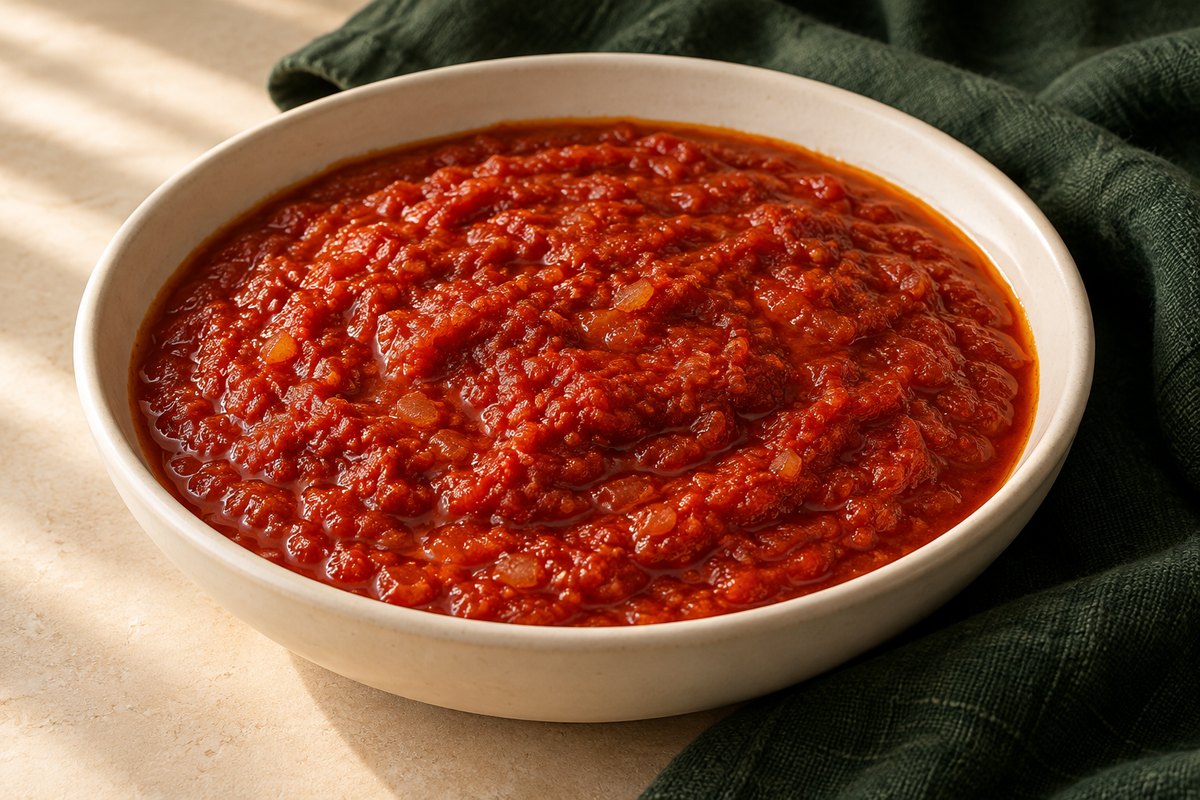
Ingredients and method
A small batch for several meals; final volume depends on reduction
Planning estimate: 60–90 min · Moderate. Fresh tomatoes vary in reduction time.
Timing guide: Allow about 10 minutes to prepare and blend, then reduce the fresh puree until thick. After softening the onion, allow roughly 20–30 minutes for the frying stage. Watery tomatoes or a narrow pan can take longer.
Method
- Blend the tomatoes and optional hot pepper to a smooth puree. Start without water and add only a spoonful if required by your blender. Use a wide, heavy saucepan with room for splattering.
- Simmer the puree over medium heat, uncovered or under a splatter screen, stirring and scraping regularly. Reduce until thick enough for a spoon to leave a trail and there is no clear watery layer around it. Lower the heat as it thickens, then transfer to a heatproof bowl.
- Mix the tomato paste with the 2 tablespoons water. Put the oil and diced onion in the emptied pan and cook over medium-low heat until the onion is soft. Carefully add the thickened tomato puree and loosened paste; expect sputtering.
- Cook gently, stirring frequently across the whole base of the pan. Continue until the sauce is deep red, its raw tomato aroma has mellowed and shiny oil streaks appear around the edges. Allow roughly 20–30 minutes for this frying stage as a planning estimate, adjusting heat before the paste catches.
- Taste a cooled spoonful. Add salt if using the base immediately; leave it lightly seasoned if it will go into another recipe. If oil pools heavily, spoon some off after taking the pan off the heat. Do not pour a heavy pot of hot oil.
- Serve a portion loosened with water or vegetable broth, or divide the concentrated base into small shallow containers. Refrigerate promptly or freeze. Label each portion with the date and amount so it is easy to use later.
A base you can season later
Nigerian tomato stew can mean a concentrated cooking base or a finished stew with meat or fish. This recipe is the vegetarian base. For a serving sauce, loosen a portion and season it with a little curry powder, thyme or vegetable bouillon to suit the meal. Check bouillon labels if vegan.
Roma tomatoes are a useful US plum-tomato choice. Tomato paste is concentrated and sold in small cans or tubes; US canned tomato puree is a wetter product. Do not substitute one for the other by the tablespoon.
If it tastes sharp or sticks
Ripeness affects acidity: cooking mellows raw tomato flavor but does not guarantee a sweet sauce. First check that the water has reduced and the paste has cooked. Avoid chasing every trace of tang by cooking until black.
This smaller batch keeps a measured amount of oil in the sauce rather than relying on a large excess that is later drained. It needs gentle heat and frequent stirring. Dark specks and a bitter smell mean scorching; move the unburned sauce to a clean pan without scraping the bottom.
Storage and using it in rice
Refrigerate within two hours, or one hour above 90°F, and use within 3–4 days at 40°F or below. Thaw frozen portions in the refrigerator, never on the counter. Reheat sauce to a boil and 165°F throughout.
This base is thicker and contains less pepper than the sauce in our jollof recipe. Do not replace its entire sauce-and-broth mixture cup for cup; use a recipe designed for prepared tomato stew.